

In the fast-paced world of travel and tourism, a booking system is the heart of the business. Planning and managing tours without proper software is not only challenging but also a competitive disadvantage. The right online tour booking software makes it easier for travel agencies, tour operators, and solo guides to handle bookings, organize itineraries, and deliver a smoother experience for their customers.
Moving towards 2026 means more automation and complete digitization. To help you through this crowded and competitive market, we have reviewed the top 10 online tour booking software solutions. Our information is based on various trusted sources to provide a clear and complete picture of pricing and user experience.
Top 10 Online Tour Booking Software Solutions
Whether you are a solo tour guide or a large-scale agency, the right software is essential to manage automated bookings, maximize communication, scale revenue, and eliminate technical uncertainties.
Let’s explore the top 10 best booking software available in 2026:
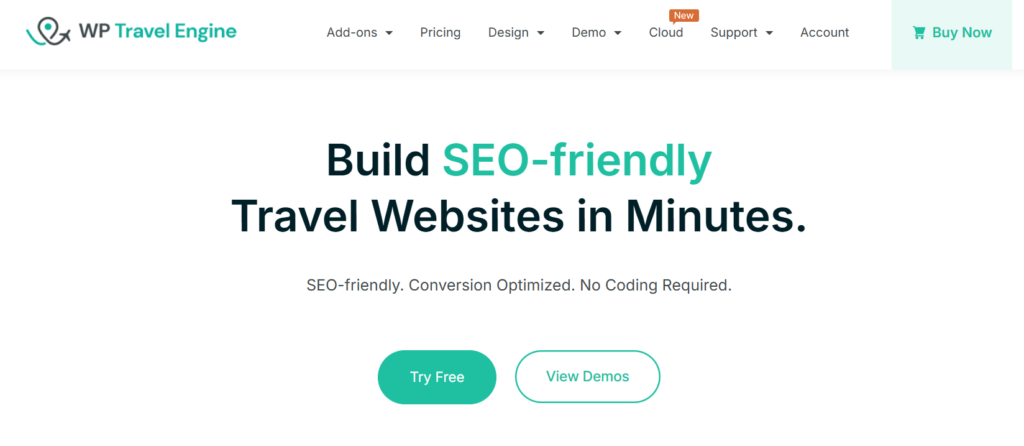
WP Travel Engine
Best for: Agencies operating on the WordPress platform.
Important for: Transforming any WordPress site into a fully functional travel booking solution with full control over branding without inflated SaaS prices.
Key Features:
- Build the custom trip with detailed itineraries including highlights, schedules, and galleries.
- Integrates with multiple payment gateways such as PayPal, Stripe, and other regional ones.
- Provides booking add-ons such as trip reviews, partial payments, and group discounts.
- Includes a progress bar that shows an enhanced conversion rate.
- Provides an AI-driven smart search feature that understands natural language queries and translates the website into local languages.
- Smart search filters help customers to find their dream vacation by filtering tours by places, price ranges, activity type, or destination.
- Incorporates maintainable code and schema markup for SEO optimization/ranking higher on Google search results.
- Uses an advanced email automator to automate emails containing payment receipts, booking confirmations, and trip reminders to the guests.
Pros:
- Easily integrates into existing WordPress sites (everything can be managed from a dashboard).
- Highly customizable and scalable through add-ons.
- One-time payment to unlock premium features.
- Features like group discounts, currency switchers, and trip reviews as per business needs.
- Creates multilingual websites to capture a broad spectrum of customers.
Cons:
- Dependent on the WordPress website, as it is a plugin.
- It may be complex for non-technical users to learn.
- Live-chat support is unavailable for unpaid customers.
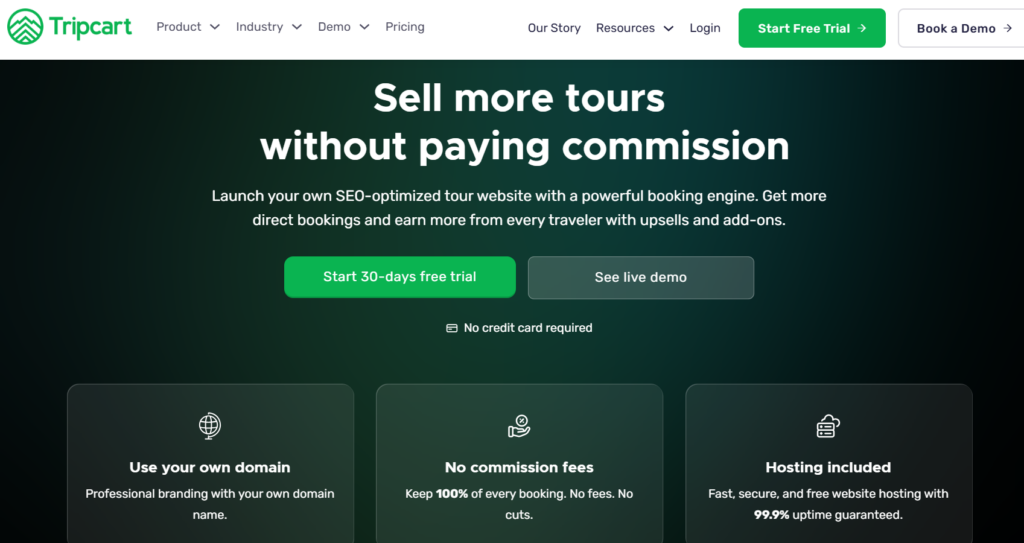
Tripcart
Best for: Small to Medium-sized tour operators and startups
Important for: Managing a streamlined platform for operators without separate hosting or coding.
Key Features:
- Contains an integrated website builder that creates an SEO-friendly website with pre-made templates (only drag-and-drop) in minutes.
- Practices price variations for different seasons, groups, holidays, sizes, or age-based pricing.
- Includes fast cloud hosting with an uptime guarantee of 99.9%, ensuring that it loads quickly all over the world.
- Manages offline bookings with added phone numbers or walk-in reservations and online reservations with WhatsApp.
- Helps increase average order value and revenue with smart upsells and add-ons.
- Incorporates an automatic system to track customers who try to leave the site before paying and remind them to finish their booking, reducing drop rates.
- Follows AI Website Optimizer that modifies your page layout according to real-time visitors to increase conversion.
- Integration of different payment gateways like Stripe and PayPal for easy, secure, and instant transactions.
Pros:
- Retains 100% of every booking as no commission fees are deducted.
- No hidden mark on the payment gateway service.
- Hosting with complete security making it a complete all-in-one solution.
- Highly optimized for performance and speed for Core Web Vitals.
- Purchase discounts on long term commitment.
- Modern and optimized UI/UX for both operators and customers’ dashboards.
- Bundled pricing for both hosting and website builder.
Cons:
- Might sometimes feel less flexible than the alternatives.
- Subscription-based pricing could be considered a downside.
- Vendor lock-in might be a hassle if you try to transfer websites/design from the platform.
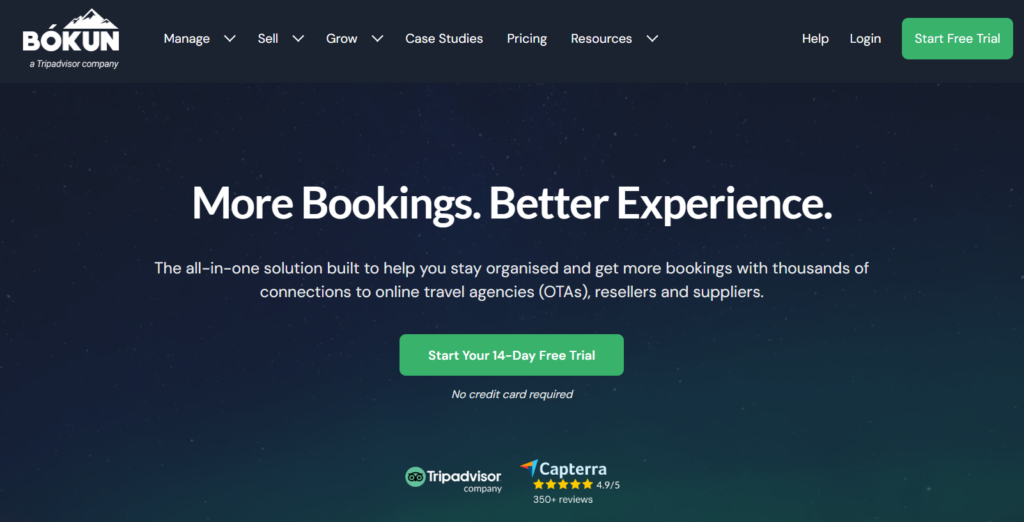
Bókun (by Tripadvisor)
Best for: Operators wanting to have a global reach on OTAs.
Important for: Providing a seamless connection between marketplace integration and OTAs like Viator.
Key Features:
- One-click data import from Viator, saving time and resources over manual data entry.
- Access to a massive network of 27000+ resellers for tour package sales.
- Creates a modern, professional, and bookable website with one click.
- Streamlined channel management for validating availability across multiple platforms from one place.
- Seamless integration with NeverClosed.AI for handling customer inquiries and bookings using WhatsApp or Web-Chat.
Pros:
- Provides low booking fees.
- Great global presence and excels in reach and marketing strategies.
- Can add unlimited products and manage multiple team members.
Cons:
- Confusing for beginners to navigate due to complex features.
- Getting quick help is difficult due to the large number of global customers.
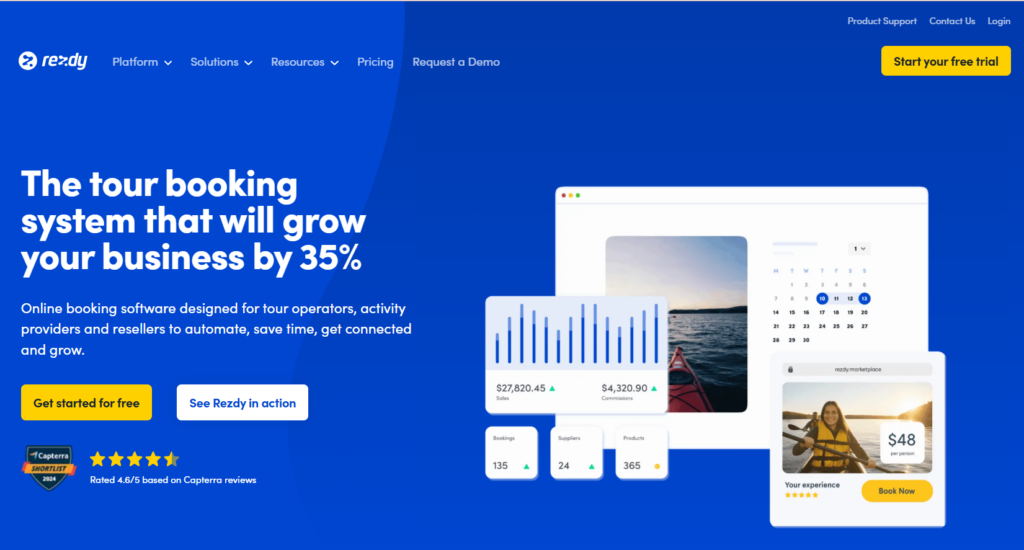
Rezdy
Best for: Mid-to-large operators operating through agents and OTAs
Important for: Distribution scaling that sells tours through multiple platforms without overbooking risks.
Key Features:
- Follows a B2B marketplace connecting with thousands of agents worldwide.
- Automatic sync across channels to prevent accidental bookings.
- Send instant confirmations and verifications of payment/commissions to agents or resellers.
- Prepares daily schedules and guest lists for guides to have a smooth tour operation.
- Includes an AI demand forecasting feature to monitor new time slots or increase prices according to historical data/local trends.
Pros:
- Easy exposure on major travel sites like Travel Advisor.
- Easily handles high volumes of bookings and complex schedules.
- The interface is clean and easier to navigate.
Cons:
- Monthly subscription is pricier than those of other competitors.
- Additional fees are also included for every ticket sold online.
FareHarbor
Best for: Tour companies prioritizing mobile and local sales
Important for: Providing free software for operators and businesses that need a professional setup without any monthly overhead.
Key Features:
- Provides free setup service as their team manually builds the booking dashboard and integrates it with the website.
- Smooth booking flow with optimized cost.
- Includes Skipper, a dashboard assistant to generate financial reports and update the manifest using voice or text commands.
- Facilitates with a 24/7 real human support team to deal with technical issues.
- Provides an easy, lightweight mobile app to manage bookings and check-ins even from the trails.
Pros:
- Cost-efficient for startups as it doesn’t need a monthly subscription.
- Expects a high conversion rate for turning visitors into buyers, great for ROI.
- Provides one-on-one training sessions to understand the product and process.
Cons:
- Customer service fees make the tour look more expensive.
- Limited customization of data and reports for intelligence.
Checkfront
Best for: Multiple service tourism businesses such as: Tours, Accommodations, and Rentals.
Important for: Business with complex operations (needing management over availability, pricing, and scheduling).
Key Features:
- Track equipment (like bikes or kayaks) in real-time to avoid issues such as double-booking.
- AI insights on resource allocation that can predict maintenance needs for equipment.
- Manage all bookings, schedules, and resources available from a single dashboard.
- Integrates third-party services (Mailchimp, Xero, and QuickBooks) for seamless business operations.
- Integrates digital/automated waivers for handling adventure activities.
Pros:
- Provides flexibility for different types of businesses.
- Allows proper resource allocation with powerful automation for handling things like: Customer emails, Follow-up requests, etc.
- Supports multiple languages and currencies, making it fit for international tourism.
Cons:
- Could be costly for smaller operators or startups.
- A complex interface may overwhelm the new users.
Peek Pro
Best for: Managing bookings through tablets or smartphones.
Important for: Achieving smoother business operations and increasing revenue with powerful marketing tools.
Key Features:
- Provides 24/7 booking with an automated online system, allowing customers to book and pay for tours at any hour.
- Incorporates a feature-rich Peek pulse mobile app that manages bookings, check-ins, and payments from anywhere.
- Automatically sends follow-up messages or confirmation emails to the customers who didn’t complete their booking.
- Adjusts pricing automatically based on demand, similar to surge pricing.
- Uses Peek pulse AI to automate Abandoned Cart with voice/text discounts, which can mitigate the risk of revenue loss by 15%.
Pros:
- Beautiful UI/UX with an organized workflow.
- Focuses on tools like online booking and dynamic pricing to boost business scale/revenue.
Cons:
- Pricing is not so clear. Quote-based pricing leads to confusion and potential delays.
- Contains a complex setup, which makes it difficult for a non-technical person to use.
Regiondo
Best for: Tours and activities in Europe
Important for: European operators, offering multi-language and multi-currency support.
Key Features:
- Compliant with GDPR and automated customer support in 12+ languages with customer data security and privacy in mind.
- Incorporate a ticket scanning app that performs quick check-ins using mobile phones.
- A centralized calendar integration to manage staff, tour dates, and equipment.
- Integrates seamlessly with different platforms like GetYourGuide, Expedia, and Viator for customer reviews and offers.
Pros:
- Strong focus on European markets and regulations (GDPR).
- Keeps track of guests’ details and prepares a report, facilitating business milestones and goals.
- Securely accepts different payment methods.
Cons:
- Pricey for startups.
- Support issues during high booking volumes.
TrekkSoft
Best for: Adventure companies and multi-channel businesses
Important for: Managing complex operations with POS, resource allocation, and partner management.
Key Features:
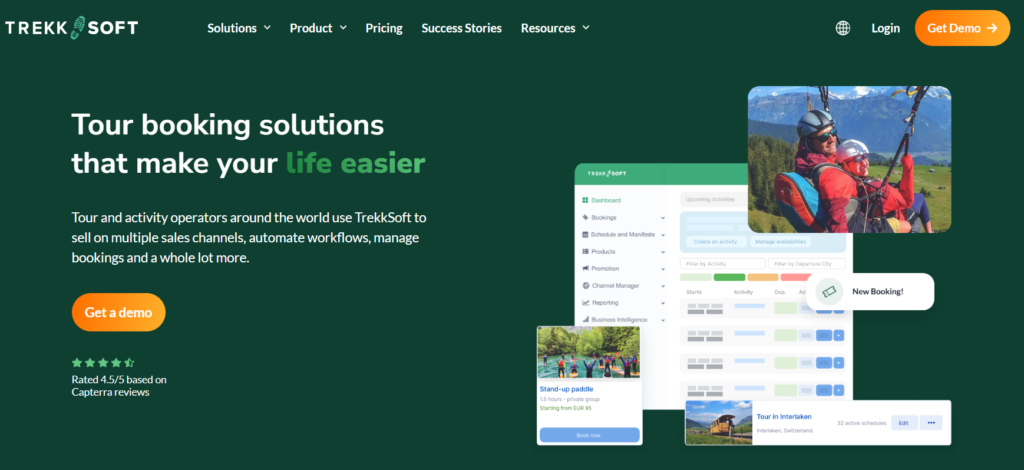
- A Swiss-made software used to manage high-level resources.
- Maintains AI-optimized multi-channel sync to highlight/prioritize your website during high demands.
- Attracts customers with user-friendly websites and SEO tools.
- Manages all bookings/operations from one platform with real-time sync across websites and travel platforms.
- Accepts payments globally and works with travel agents/local operators to reach more customers.
Pros:
- Fulfills most business operational needs.
- Destination management and multi-channel sales.
- Supports multiple resellers and robust automation.
Cons:
- Overwhelms beginners due to the depth of features.
- Advanced features require a high-tier subscription.
Travefy
Best for: Travel advisors and boutique operators.
Important for: Transforming from an itinerary builder into a full booking, CRM, and invoicing platform.
Key Features:
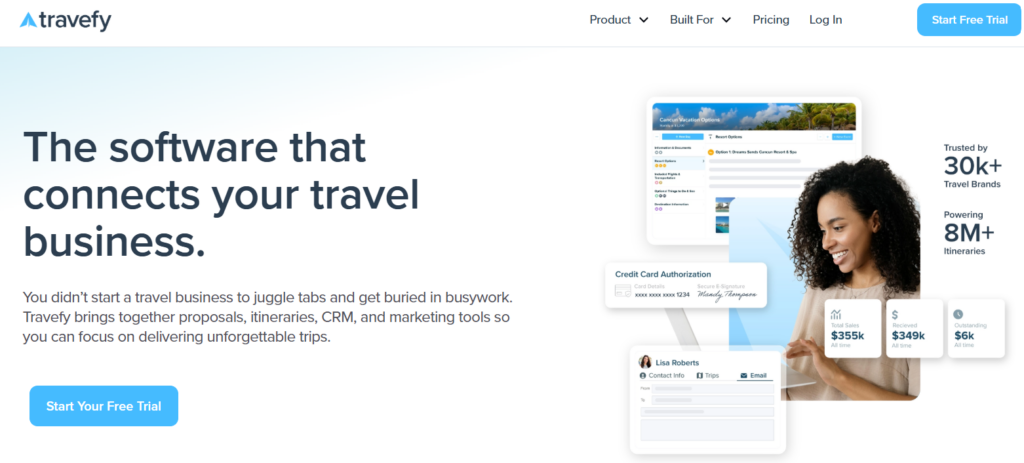
- Contains integrated AI Itinerary Builders for creating visual itineraries, maintaining a mobile-first approach, and preparing appealing trip plans for clients.
- Contains a centralized database for booking and reservations.
- Fingerprints client preferences and history using integrated CRM and lead management.
- Has integrated invoices that accept payments directly through itineraries.
Pros:
- Excellent for custom itinerary design.
- Provide mobile app access for clients.
- Saves hours of manual document preparation.
Cons:
- Not enough focus for high-volume daily tours.
- Advanced features may require premium subscriptions.
Why Every Tour Business Needs an Online Booking System
Online tour booking software reduces the stress of a tour business or operator. It takes off manual work and automatically handles bookings and payments in one place. It also provides a quick and simple booking process, which makes it easy for customers to complete their reservations, increasing confidence and trust in your brand.
Key benefits are:
- Lower operational cost and less manual effort
- Proper resource utilization with automated bookings and payments
- Enhances customer trust and lowers refund/disputes
- Enhanced visitors’ engagement and converted them into customers
- Consistent pricing and markup rules
- Automated invoices and booking confirmations
- Facilitates cross-country presence and easy multi-brand management
Pricing and Fees Comparison Among Tour Booking Software Solutions
| Software | Starting Price (Approx.) | Booking Fees / Other Fees | Best For |
| WP Travel Engine | Free core (Add-ons from $99 per year) | 0% (no platform booking fee) | WordPress users |
| Tripcart | $29 – $39 per month | No pre-booking fees/commissions | Startups and mid-size agencies |
| Bókun | ~$49 per month | 1.25% – 1.5% | Global/Viator distribution |
| Rezdy | ~$49 per month | ~2% | Mid-to-large operators |
| FareHarbor | No subscription fee | ~6% booking fee + (~ 1.9% +30¢) payment processing | Mobile/local sales |
| Checkfront | ~$99 per month | 3% online booking fee | Multi-service operators |
| Peek pro | Quote-based | ~ 6 – 8 % per booking + setup fee | Mobile-first operations |
| Regiondo | ~€49 per month | Variable (~ 3% + per-booking fee) | European operators |
| TrekkSoft | ~$58+ per month | Variable (~ 3% direct + fees) | Resource-heavy operations |
| Travefy | ~$31 – $39 per month | 0% (merchant’s fee applies) | Luxury/custom tours |
Here, the mentioned prices and fees could vary by region, number of bookings, and merchant plan.
The 2026 Shift: Why You Need Agentic AI?
In 2026, the difference between a good and a better tour booking system is aligned with Agentic AI. This is not a simple chatbot but a smart digital assistant. It not only answers your questions but also takes action on its own to complete the work.
While talking from a tour booking perspective, this AI can perform the following:
- Chat with the customers from your website
- Understand their preferences about trip
- Suggests the best tour packages and options
- Checks availability and prices in real time
- Make the booking for them and send confirmation emails
- Sends payment links and reminds them before the trip
- Finally, rebooks or suggests alternatives while cancellation
- Increases revenue and lowers staff burnout
So, Agentic AI = AI that can think, decide, and act like a real booking agent.
Verdict: Choosing Your Best Fit
Choosing the right tour booking software entirely depends on your business. Platforms with Agentic AI became the new standard in 2026. So you have to be mindful of understanding how smart the system is, and how much work it can automate/digitize.
Here is the final breakdown on these platforms that may help you to decide:
- WP Travel Engine is a great choice if you want a flexible website-first solution with strong WordPress integration and growing AI features.
- Tripcart is the best choice if you want a ready-made system without worrying about hosting and security. It stands out on AI-driven sales tools that facilitate businesses focused on conversion and checkout optimization.
- Bókun or Rezdy are suitable for large operators or businesses that need global distribution and a tech-forward experience. They are the best at avoiding double bookings and managing everything from one place.
- Peek Pro and FareHarbor are more practical if you want to focus on automation, upselling, and operational efficiency.
FAQs When Picking a Tour Booking Software
1. What is tour booking software?
It is a digital platform for travel agencies that automates online reservations, schedule management, payment, and customer communications. It provides a real-time availability for clients to book tour packages 24/7.
2. Should I choose a SaaS or plugin-based solution?
Choose SaaS (Tripcart, Bókun) to have an easy-to-use system with quick setup, low cost, and minimal tech setup or maintenance. It comes with limited customization.
Choose a plugin-based solution (WP Travel Engine) to have full control, customization, and SEO advantage of your website and data. It is suitable for content-driven sites.
3. Do all platforms include booking fees?
Not always. Some tools, such as WP Travel Engine and Tripcart, charge a subscription fee only, while others, like Rezdy and FareHarbor, can add transaction fees on top of subscription fees.
4. Can I manage walk-in customers or phone bookings with this software?
Yes. Top-tier platforms like Rezdy, Peek Pro, and Tripcart include a “Back office” or “Point of Sale (POS)” feature that manually enter the booking from call or walk-in guests. The system will make space for these bookings from the online inventory to eradicate the double-booking issue.
5. Does the software work if I’m in a remote area with no internet?
Yes. Many providers offer “Offline Modes” through their online apps. You can check the manifest and check in as a guest while in a remote area. After accessing Wi-Fi or cellular data, the app will automatically sync with the cloud.
6. Can I switch platforms later?
Yes, most platforms allow data export. But migration of bookings or tours requires careful planning to avoid SEO or operational issues.
7. Are there free options for tour bookings?
Yes. WP Travel Engine is a great choice that is free. Also, other SaaS vendors/alternatives offer free trials, entry tiers, or lower fees.